

Spotlight: Dr. Jaclyn Lennox (IL ‘25)
March 27, 2026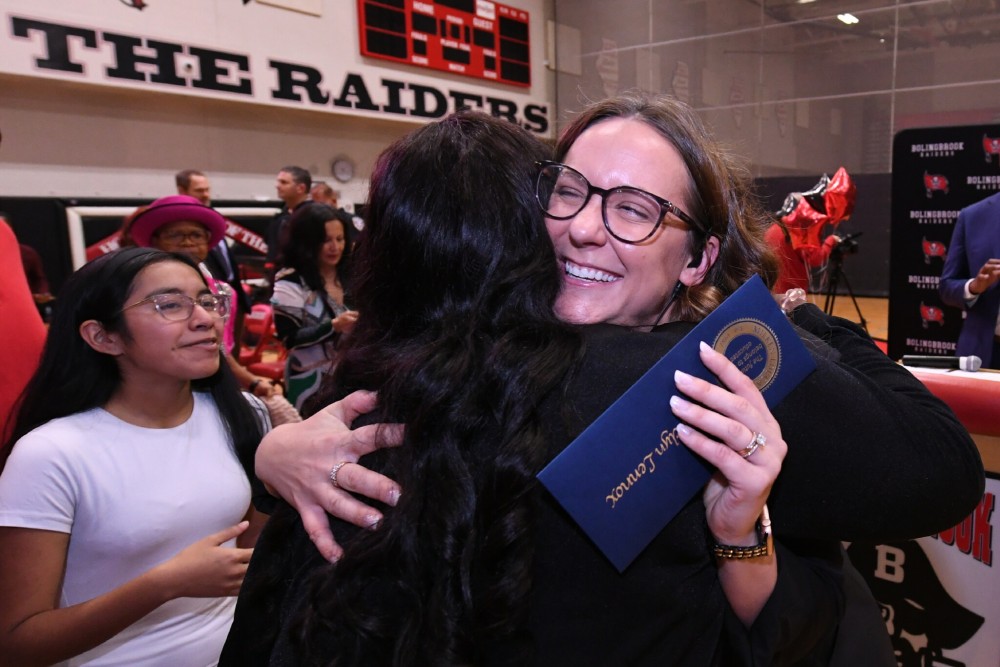
Illinois Milken Educator Dr. Jaclyn Lennox (IL ‘25) is an assistant principal of curriculum and instruction at Bolingbrook High School. As a former math teacher turned innovative administrator, she has boosted graduation rates, reduced absenteeism, and expanded AP participation through data-driven decisions and empowering educators. From mentoring teachers to connecting with families, Dr. Lennox is transforming learning and leadership across her school community. Dr. Lennox received a Milken Educator Award on October 16, 2025.
Milken Family Foundation: How did you feel at your Milken Educator Award notification?
I was in complete shock and incredibly humbled by the experience. I firmly believe that the work we do in schools is never accomplished by one person alone; it takes a team of dedicated educators working together to support students. Being selected was truly an honor, and I view the recognition as a reflection of the collective commitment and hard work of the many individuals who pour their energy into the lives of our students every day.
MFF: How did students respond to your Milken Award?
Bolingbrook High School is a large community, so it has been especially meaningful when students, including some I had not previously worked with, have taken the time to acknowledge the Award. In many ways, the recognition has helped build new connections with students. Even now, I occasionally have students or parents stop me in the hallway to mention it, which always leads to a great conversation and an opportunity to strengthen those relationships.
MFF: How did you end up in education?
Education has always been a central part of who I am. My father was a middle school science teacher who later became an administrator, and for as long as I can remember, I wanted to be “just like my dad.” Some of my earliest and fondest memories are of helping him set up his classroom before the first day of school or serving as his “grading assistant.” I saw firsthand how much his students and colleagues respected him, the way he connected with people, and how he made a lasting impact on their lives.
Along the way, three teachers also played key roles in shaping my journey and deepening my passion for mathematics. My fourth grade teacher was the first to recognize my ability to support others when she noticed how I used arrows to help a classmate understand long division. Until then, school had often been challenging for me, especially in reading, spelling, and speech, so her encouragement still resonates with me today.
In high school, two teachers transformed how I saw myself as a learner. My freshman year math teacher helped me discover my love for algebra and encouraged me to take more advanced classes. Because she believed in me, I doubled up on math my sophomore year, taking both Honors Geometry and Honors Algebra II. By senior year, I was in AP Calculus BC with a teacher who made even the most complex concepts feel accessible and inspired confidence in every student. Both teachers showed deep care and a genuine desire to see us succeed—qualities I strive to emulate as a school leader.
Ultimately, my father’s influence and the encouragement of these teachers made my decision to become an educator an easy one. I hope to continue their legacy of connection, encouragement, and lifelong learning for students, just as they did for me.
MFF: How do you define “success” for yourself, and for your students?
For me, success is rooted in goal-setting and continuous improvement, both personally and for our students. Professionally, success means listening, learning, and collaborating with others so that I can serve the community I work in to the best of my ability. My goal is to create systems and structures that support teachers in their work and help students grow academically and personally.
For students, success can look different for each individual. My hope is that every student feels safe, valued, and supported while discovering who they are and what they may want to pursue in the future. When students leave our school with confidence in themselves and a sense of direction, that is true success.
MFF: Who are your role models in education?
My father has always been my role model in both teaching and administration. Although he retired when I was in high school, he continued serving in interim roles and as a substitute teacher because his passion for education never wavered. It means a great deal to me to make both him and my mom proud.
Since joining Bolingbrook High School, I have also been fortunate to work with many inspiring leaders. My principal, Dr. Jason Pascavage, has been a particularly strong mentor and advocate who has helped me see my own potential as a leader. After working together for nearly ten years, I continue to learn from his insight, his ability to envision meaningful change, and his commitment to students. I aspire to continue developing as a visionary leader in the same way.
MFF: What do you hope students remember about you?
I hope students remember my positivity and the genuine care I have for supporting them. At the beginning of each semester, we remind students during assemblies that they can come to us with concerns or when they need support. For the students who take us up on that invitation, I want them to know that I am in their corner. I will advocate for them, support them, and also hold them accountable so they can grow and succeed.
MFF: How do you balance using data to drive measurable gains in student success while still prioritizing relationships and teacher empowerment?
Relationships are the foundation of everything we do in schools. Whether they develop naturally or begin through structured opportunities, strong relationships with students and staff are invaluable.
As a leader, it is important to listen to feedback from teacher leaders while examining multiple sources of data to understand student progress. At the high school level, success can be defined in many ways, but on a macro level we often monitor indicators such as freshman on-track rates and graduation rates. While those are important outcomes, the work happens throughout the year as teams regularly discuss academic performance, behavior, attendance, and social-emotional supports.
By creating space for these conversations, teachers are empowered to use their professional expertise to support students in ways that best meet their needs while still aligning with our shared goals for student success.
MFF: What key leadership strategies helped you successfully launch and sustain initiatives like the Academic Recovery Center and expanded career readiness opportunities?
One of the most important leadership strategies I practice is allowing leaders to lead. Throughout my tenure, I have learned the value of trusting and empowering others to bring their ideas and expertise forward, even when it means encouraging them to take risks.
Staying humble and asking questions are equally important, especially when navigating new initiatives or complex challenges. While creating structures and systems has always been a strength of mine, sustaining those initiatives requires ongoing collaboration, reflection, and data review.
Successful programs grow over time. Sometimes the most meaningful improvements come from small adjustments rather than major changes. Remaining open-minded, listening to others, and continually refining our approach has allowed these initiatives to evolve and better support our students.
MFF: Are you working on any interesting initiatives or new projects these days?
Currently, we are working on a Trusted Adult initiative designed to strengthen relationships between students and staff. The goal is to ensure that every student has at least one adult in the building they feel comfortable connecting with and turning to for support.
We completed a soft launch this year and are continuing to refine the process. Moving forward, we plan to learn from other districts and explore ways to better collect and analyze data so we can strengthen the initiative over time. Ultimately, our hope is that this work supports the whole child while helping staff reflect on and strengthen the relationships that are so essential to student success.
Don’t miss any new articles and updates from Milken Educator Awards: