

Spotlight: Shane Henderson (NC ‘25)
July 24, 2026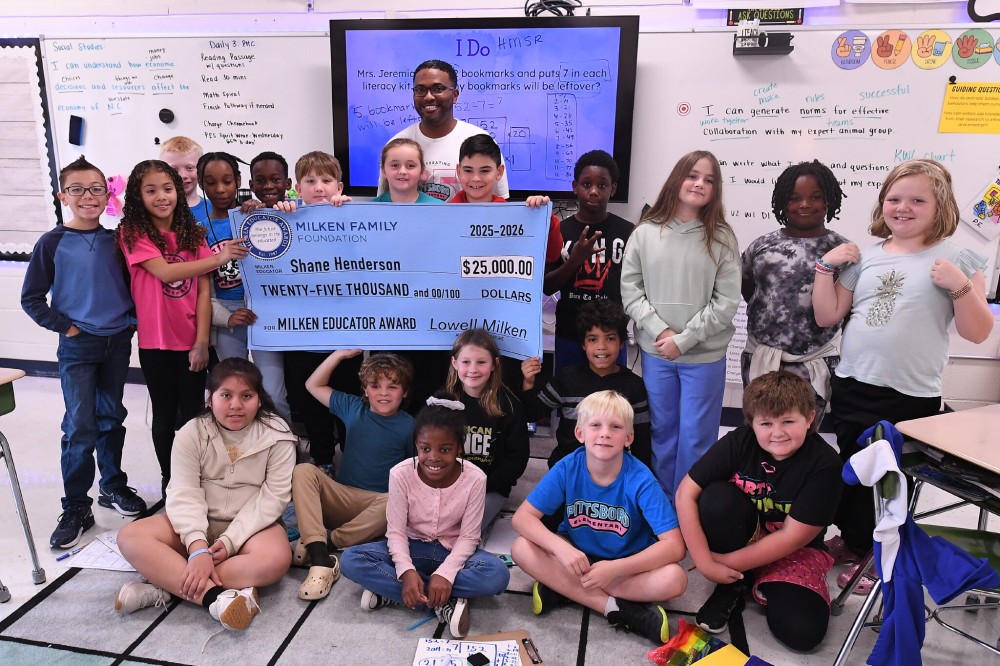
Pittsboro Elementary School fourth grade teacher Shane Henderson (NC ‘25) is pouring his heart back into the Chatham County community that raised him, lifting students through innovative teaching and a powerful growth mindset. From bus driver to beloved teacher, he’s helping his students soar, including a 16-point jump in reading proficiency. Whether leading clubs, mentoring peers, or continuing to fill in as a bus driver when needed, Henderson’s heart of service and compassion shines far beyond his classroom walls. Henderson received his Milken Educator Award on November 19, 2025.
Milken Family Foundation: How did you feel during your Milken Educator Award surprise?
I was in complete shock. Even as my students rushed over and hugged me, it felt like an out-of-body experience. I kept thinking, “Is this really happening? Do they have the right name?” The entire day was a blur. I’m not someone who enjoys being the center of attention, and I was definitely pushed far outside my comfort zone at that moment.
I remember telling a family member that this recognition felt completely out of my comfort zone, and they said, “When you do good, good will always find its way back to you.” That perspective stuck with me and helped me see the moment not as something I chased, but as something that reflected the work I’ve put in.
MFF: How did students respond to your Milken Award?
When my name was called, my students rushed to my seat and wrapped me in one big group hug. It was pure excitement and joy all at once. As I stood up to accept the Milken Award, they started chanting, “Hen-der-son! Hen-der-son!” The energy in that moment was unforgettable. Back in the classroom, they continued celebrating with smiles, high-fives and kind words. I always push my students to reach their full potential, and when I received my Milken Award, they made me feel like I was reaching mine, too.
MFF: Who are your role models as an educator?
As a product of my school system, I’ve been fortunate to learn from many role models and mentors who continue to inspire me. My former high school English teacher is now the school board president, and I also work alongside educators who once taught me and are still serving in the district today. Because of them, I understand the importance of showing up every day with purpose and believing in students, even when they don’t yet believe in themselves. I strive to carry that same impact forward in everything I do.
MFF: What inspired you to become an educator?
My path into education came from seeing the impact one person can have on an entire community. My uncle worked as an instructional assistant and bus driver, and he was deeply respected by students, staff and families. Watching how he connected with others and made students feel valued left a lasting impression on me, and I knew I wanted to have that same kind of impact.
I started by earning my bus license and working with the Boys & Girls Club, where I built strong relationships with students and gained a deeper understanding of their needs beyond academics. Through that experience, I worked closely with the school system and gained valuable insight into education. A turning point came after a conversation with district leadership, when I was encouraged to consider teaching. It pushed me to reflect on the impact I was already having.
Although my original degree wasn’t in education, I pursued a lateral-entry pathway with a clear sense of purpose. Since becoming a teacher, my commitment has only grown. I returned to school to earn a master’s degree in elementary education with a focus on curriculum and instruction, which strengthened my ability to design meaningful learning experiences. I’m motivated every day by the opportunity to build relationships, support students and be a consistent, positive presence, just as my uncle was for so many.
MFF: What do you hope students remember from their time with you?
From the first day of school, I work to shift my students’ mindset. I want them to see themselves not just as learners, but also as individuals who take ownership of their growth, lead by example and care for the people and environment around them. I encourage them to carry that mindset wherever they go—at school and in every part of their lives. That foundation sets the tone for everything we do.
I challenge them to reach their full potential and not settle for “good” when they are capable of more. I hope they remember that I believed in them and pushed them to see that in themselves. More than anything, I want them to leave knowing that effort matters, growth is always possible and they are capable of more than they think.
I also want them to remember the kind of person they chose to be. We often talk about character: showing kindness, doing the right thing when it’s hard, taking ownership when they make mistakes and treating others with respect. If they leave striving for excellence while leading with integrity and compassion, then I know what I poured into them will stay with them long after they leave my classroom.
MFF: What is your advice to those who want to work in education?
Go into education with both passion and perspective. This work is incredibly meaningful, but it’s also becoming more challenging year after year. The demands are high, and it requires patience, resilience and a strong sense of purpose to stay in it. Build strong relationships, be intentional with your instruction and celebrate the small victories, because those moments matter more than you realize. Advocate for what’s best for kids, even when it’s not easy.
Most importantly, believe in every child’s potential. Even on the hardest days, remember that your impact reaches far beyond the classroom.
MFF: You’ve significantly improved reading outcomes. What’s one strategy that made the biggest difference?
Strong core instruction is essential. You can’t fix weak Tier 1 instruction with interventions alone. My principal and assistant principal often comment on the sense of urgency in my classroom, and I truly believe every minute matters. Maximizing instructional time is key to helping students reach their full potential.
One shift that made a big difference was moving from fixed groups to more flexible groupings based on specific skill needs rather than overall proficiency. A student might be strong overall but still have gaps in certain areas, and this approach allowed me to target those needs more precisely. I used data intentionally to identify and address those gaps, ensuring every student strengthened the skills they needed most.
At the same time, one of the most powerful things I did was consistently speak belief into my students, reminding them that they are capable and that they can succeed. For some, it was the first time they had heard that, and it made a lasting difference.
MFF: How has your journey from bus driver to teacher shaped your leadership and connection with students?
My journey from bus driver to teacher has shaped both my leadership and connection with students in meaningful ways. Before teaching fourth grade, I taught first grade, where I served as grade-level chair and contributed to the school improvement and behavior teams. Those experiences strengthened me as an educator and deepened my commitment to collaboration and student-centered decision-making.
Starting as a bus driver and later serving as an instructional assistant gave me a broader perspective and a deeper understanding of students’ lives both inside and outside the classroom. Those experiences continue to ground my work and remind me of the importance of every role within a school community.
I’ll never forget where I started. Instructional assistants and bus drivers are essential to a school’s daily operations, and I’m always willing to support them however I can. I still maintain my CDL and would not hesitate to step in and drive a route if needed. I understand what it’s like to complete a full route, return to school and be asked to run another because of a shortage.
The relationships I’ve built over time mean a lot to me. I’ve had the opportunity to see students I once knew from the bus later sit in my classroom. I’ll never forget a student I first met as an instructional assistant, waiting each morning with her family, excited to get on the bus. Years later, she was in my fourth grade class. Moments like that are a reminder of the lasting connections we build with students and families over time.
Don’t miss any new articles and updates from Milken Educator Awards: