

Spotlight: Lexcee Oddo (KS '25)
May 15, 2026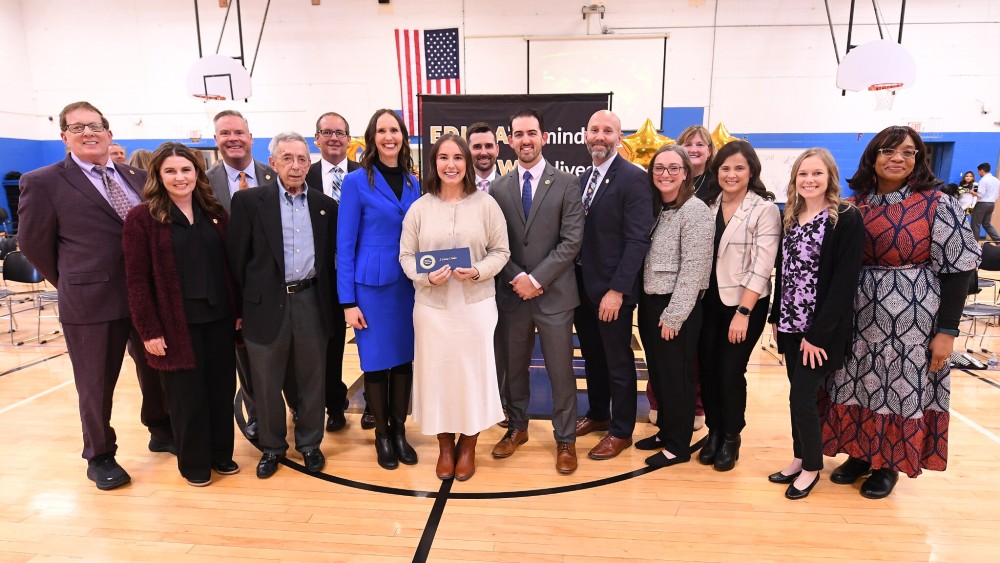
Lexcee Oddo (KS ‘25) transforms learning through high expectations, individualized support, and a classroom culture rooted in growth and belonging. From mentoring colleagues to strengthening family engagement, she leads with both purpose and compassion. Her commitment to multilingual learners, relationship-centered teaching, and helping students build confidence in themselves reflects the deep impact she is making within the Turner Elementary community. Oddo received her Milken Educator Award on December 4, 2025.
Milken Family Foundation: How did you feel at your Milken Educator Award notification?
Last December, I experienced one of the most unexpected and humbling moments of my career: being surprised with the Milken Educator Award. What I thought was a routine school assembly quickly turned into something I’ll never forget. Standing there, completely caught off guard, I felt a mix of disbelief, gratitude, and deep pride—not just for myself, but for the students, colleagues and community I’m lucky to be part of every day.
This recognition means so much because it reflects the collective effort of so many people who believe in what education can do. I’m grateful for the opportunity to keep growing, learning and making an impact where it matters most. It still feels surreal.
MFF: How did students respond to your Milken Award?
One of the most special parts of receiving the Milken Educator Award last December was seeing my students’ reactions in real time. What started as a normal assembly quickly turned into confusion, then excitement, and finally full-on celebration once they realized what was happening. The cheers, the chants of my name, and the pride they showed made the moment even more meaningful to me.
Honestly, the moment didn’t end that day because my students still ask me almost daily whether I actually got the money yet. Their excitement, curiosity and sense of humor are a big part of why I love what I do. This recognition may have been for me, but it will always feel like something we share.
MFF: How did you end up in education?
People sometimes ask how I ended up in education, and the truth is that it wasn’t one single moment, but a series of experiences that kept pulling me back to it. My elementary school years were especially formative. I really struggled to learn to read growing up, and looking back, the teachers who supported me during that time are connected to some of my most meaningful memories. They were patient, encouraging and never gave up on me—and that stayed with me. At some point, I realized I wanted to create that same feeling for future students: to be someone who helps them push through challenges, believe in themselves and experience those “I can do this” moments.
I’ve always been drawn to working with young children—watching confidence grow, seeing connections click, and being part of those everyday breakthroughs. What really keeps me here is the impact. Education isn’t just about content; it’s also about relationships, opportunity and helping students see what they’re capable of. Somehow, what started as a path I explored became the place I knew I was meant to be.
MFF: How do you define “success” for yourself, and for your students?
For me, success isn’t about awards or recognition—it’s about impact. It’s the quiet, often unseen moments: a student gaining confidence, taking a risk, or realizing they can do something they once thought was out of reach. If I’m growing, reflecting and showing up better for my students each day, that feels like success.
For my students, success looks different for each of them. It’s not one score or one outcome—it’s progress. It’s perseverance through challenges, building independence, and learning how to believe in themselves. Sometimes success is mastering a skill. Other times, it’s simply not giving up. At the end of the day, success in our classroom is about growth, resilience and the courage to keep trying.
MFF: Who are your role models in education?
I’m often reminded that the reason I teach is rooted in the people who taught me. Some of my earliest role models were the educators who supported me through my own challenges, especially when learning to read didn’t come easily. They showed patience, encouragement and belief in me before I had it in myself. My sixth grade teacher, in particular, made a lasting impact by helping me feel capable and supported at a time when I really needed it.
I’m also incredibly grateful for my cooperating teacher, who guided me as I learned how to become an educator, and for my current principal and colleagues, who continue to inspire me every day. I’m surrounded by people who lead with compassion, creativity and a deep commitment to students. My role models aren’t just people with titles or recognition—they’re also the ones who make students feel seen, capable and valued. Those are the educators I try to learn from and emulate every day.
MFF: What do you hope students remember about you?
I hope they remember that my classroom was a place where they were supported and believed in—a place where mistakes were part of learning, not something to fear, and where they always had the space to try again.
I hope they remember feeling seen, not just as students, but also as people with unique strengths, challenges and potential. And I hope they leave with a little more confidence in themselves than when they arrived. If years from now they don’t recall every detail I taught them but remember that they mattered in my room, that would be more than enough.
MFF: How do you create a classroom culture that blends high expectations with joy and individualized support for multilingual learners?
Creating a classroom culture that blends high expectations with joy and individualized support for multilingual learners starts with a simple belief: Every student is capable of rigorous learning when supported in the right ways. High expectations are non-negotiable, but they are paired with clear scaffolds. That means modeling often, using visuals, building routines that reduce cognitive load and giving students multiple ways to show what they know. Multilingual learners thrive when language is seen as an asset, not a barrier, and when instruction is intentionally designed to make content accessible without lowering the bar.
MFF: What drives your commitment to family engagement and teacher mentorship, and how do these efforts amplify student success?
Family engagement matters because families are students-first and most important teachers. When schools and families communicate consistently and meaningfully, students experience a stronger sense of trust and belonging. It also helps bridge language, culture and experience so families feel like true partners in their child’s education—not just observers of it.
Teacher mentorship matters for many of the same reasons. Strong support systems help educators grow in confidence, refine their practice and feel connected to a larger purpose. When teachers feel supported, students benefit. Collaboration and mentorship create stronger classrooms, stronger school communities, and ultimately better outcomes for kids.
MFF: Are you working on any interesting initiatives or new projects these days? Is there anything else you want to share about your school?
Right now, I’m focused on deepening the work we’re doing to support multilingual learners and strengthen classroom practices that combine rigor with accessibility. A big part of that work involves refining how we scaffold instruction so students can engage with grade-level content while still receiving the language support they need to succeed.
In addition to my classroom work, I serve as a local Science of Reading facilitator, which has been a meaningful way to support colleagues in implementing evidence-based literacy practices and strengthening foundational reading instruction across classrooms. I’m also a mentor for the Registered Teacher Apprentice Program (RTAP), which gives me the opportunity to support aspiring educators as they grow into the profession and begin shaping their own teaching identities. Alongside that work, I also serve as a TESOL mentor, supporting educators as they develop effective practices for teaching multilingual learners.
I recently completed my master’s degree in educational administration and finished my administrative licensure, which has added another layer to how I think about leadership, systems, and supporting both teachers and students on a broader level. What stands out most about my school right now is the sense of collective commitment. There’s a shared belief that every student can grow and that we all have a role in making that happen. It’s not perfect, but it’s a community that cares deeply and continues pushing to get better for kids.
Don’t miss any new articles and updates from Milken Educator Awards: