

Spotlight: Sarah Watkins (LA ‘25)
April 1, 2026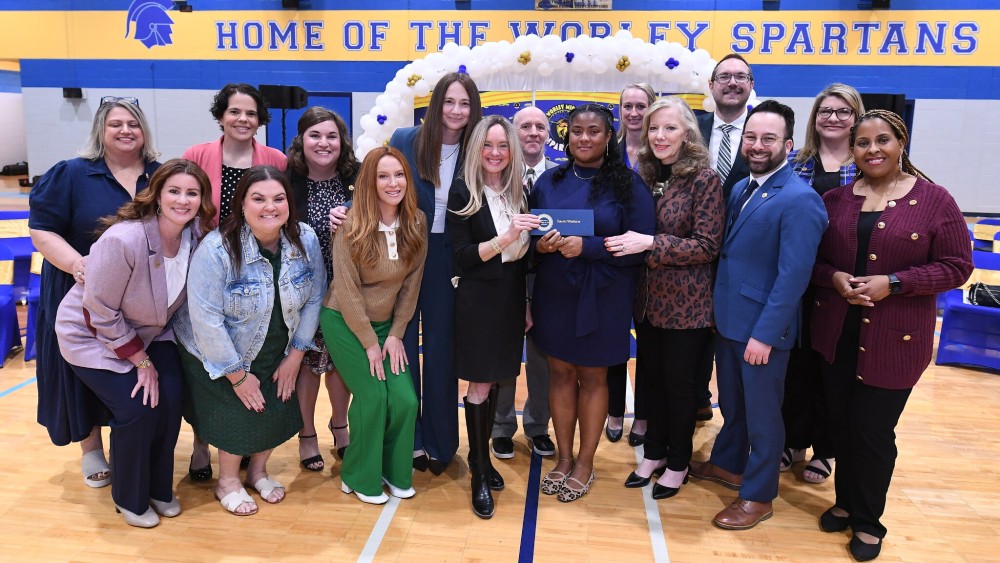
Louisiana Milken Educator Sarah Watkins (LA ‘25) is an eighth grade English language arts teacher at Stella Worley Middle School. Watkins inspires a love of learning that radiates throughout her school. Her students dive into lively discussions, build confidence, and take ownership of their learning. As a mentor teacher, coach, and community leader, Watkins uplifts both students and colleagues, making her a true model of educational excellence. Watkins received a Milken Educator Award on November 4, 2025.
Milken Family Foundation: How did you feel during your Milken Educator Award surprise?
Winning this award was truly overwhelming for me. It was such an incredible honor, and I feel deeply blessed to be recognized in that way. In the moment, it didn’t even feel real. It took quite a while for everything to sink in and for me to fully process what was happening.
MFF: The videos of your Milken Award reaction went viral on our social media platforms. Did you expect that?
Absolutely not! That was so unexpected. I had students come to me the next day to tell me that I went viral and how excited they were to see me on social media. Even though I tend to be more on the reserved side, seeing my students’ reactions was a fun moment for me.
MFF: How have your students and family responded to your Award and social media virality?
Honestly, I try to keep a low profile. I’ve only watched the video once and haven’t looked at the comments or anything. It’s such a strange feeling to be recognized by people around the city. It’s not something I’m used to, but it’s definitely been a unique experience. My students are definitely proud, though. They make sure everyone knows their teacher is a Milken Educator, and seeing their excitement has honestly been one of the most meaningful parts of this experience.
MFF: Who are your role models as an educator?
My first role models as an educator were my parents. They created a home where reading, curiosity, and meaningful conversation were part of everyday life. Watching them value education so deeply showed me that learning is more than just knowledge; it’s about connection, growth, and understanding the world around you.
My third grade teacher, Ms. Rapp, also had a profound impact on me. She showed me what a little encouragement and exposure can do for a young child. She introduced me to some of my favorite books, including Knots on a Counting Rope by Bill Martin Jr., and even took me to hear him speak at a local middle school. That experience sparked something in me, and I decided that day that I wanted to share stories. She nurtured that passion by giving me the space to begin developing my own story, even if it meant working in the hallway while others were at their desks. From her, I learned that a teacher’s role is to ignite passion and cultivate creativity so students feel empowered to express themselves in their own unique ways.
Professionally, I have been so fortunate to work alongside incredible educators who show me what it really means to be a teacher. In my first few years of teaching, I watched Ms. Phaedra Alexander lead with compassion and poise; she was dedicated to growing teacher capacity so that when we entered the classroom, we were our best selves for our students. My current principal, Dahme Bolden, and assistant principal, Erica Ellis, lead with such energy and enthusiasm that it’s contagious. They remind me how I need to show up for students each day. Finally, my students are also some of my greatest role models. Their resilience, honesty, and ability to grow push me to be more intentional, more patient, and more reflective in my practice.
MFF: What inspired you to be an educator?
I often reflect on my childhood and how fortunate I am to have been raised by such kind people who truly valued education, especially reading. It was normal to see books all over our home, with everyone—from my parents to my older brothers and me—always having a book in hand. I cherish those moments because they sparked meaningful conversations that continue to keep our family close.
Growing up surrounded by stories and ideas taught me that education is more than information; it’s about sparking curiosity and helping others find their voice in the world. Becoming a teacher felt like a natural extension of that upbringing. I want to cultivate in my students the same sense of wonder and empowerment that I experienced, to help them discover not just what they can learn, but who they can become through learning.
MFF: What do you hope students remember from their time with you?
I hope my students remember that they were seen, heard, and valued in my classroom. I want them to carry with them a sense of confidence in what they learned, as well as who they are becoming. I hope they remember that learning is a process, that growth comes through struggle, and that their voice matters.
I also hope they remember the community we built together, where we pushed one another, held each other accountable, and grew through meaningful conversations. If they leave my classroom believing in their ability to think critically, communicate effectively, and continue learning beyond my walls, then I know I’ve made a lasting impact.
MFF: Your classroom fosters student ownership and vibrant discussion. What specific strategies do you use to build that level of confidence and engagement?
I strive to create a classroom environment where students treat one another like family. With that comes the understanding that disagreements will happen, but the focus is on how we can shift those moments into constructive conversations. From the very first day of school, my students work collaboratively to build our classroom community.
Together, we create norms that apply not only to them but to me as well, so they take true ownership of what happens in our space. One expectation we always establish is to hold each other accountable. This is reinforced daily through peer review, academic discussions, and meaningful feedback. I even invite students to review my work. By allowing myself to be vulnerable, I hope to build trust and encourage them to embrace the feedback process.
A phrase they hear often from me is, “iron sharpens iron,” and it has become part of our classroom culture. Now, students are excited to peer-edit one another’s essays and offer thoughtful feedback by refining a thesis statement or deepening analysis.
MFF: As both a mentor teacher and instructional leader, how do you balance supporting fellow educators while continuing to grow and innovate in your own classroom?
Like I stated earlier, “iron sharpens iron.” Being able to go into other classrooms to co-teach with colleagues or engage in one-on-one coaching conversations with mentees allows me to learn from them as well. It pushes me to take the very strategies and feedback I share and put them into practice in my own teaching.
Through these coaching experiences, I am constantly reflecting on my own craft and identifying ways to grow. They not only strengthen those I support but also challenge me to become a better educator each day.
Don’t miss any new articles and updates from Milken Educator Awards: