

Spotlight: Dr. Christian Stanley (AL '25)
August 13, 2026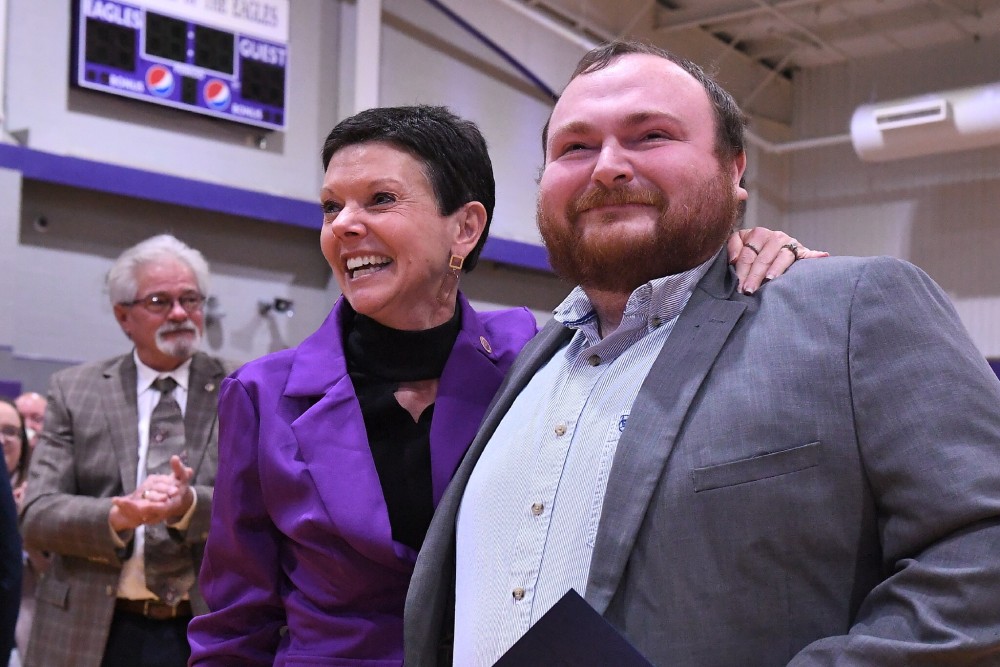
Dr. Christian Stanley’s (AL ’25) students are engaged in every aspect of farm management aligned with their coursework at the Pike County Agriscience Academy—Alabama’s only dual-enrollment agricultural program—located on the campus of Goshen High School. On the 25-acre space, they raise cattle and goats, manage greenhouses, restore tractors, and more—supplying some 120 pounds of lettuce weekly for school lunch programs, as well as meat and plants to the community. Stanley not only fuels students’ passion for feeding the world, but also instills in them compassion, confidence and selflessness to contribute meaningfully to society. That’s food for thought they will never forget. Stanley received his Milken Educator Award on December 10, 2025.
MFF: How have students responded since your Milken Educator Award surprise?
They were so proud for me, the program, and the community. On the day of the ceremony, they were crying, I was crying, and it was really powerful. They know just how much it takes for them and for me to make this program the success that it is. They were so excited and since that moment it has been so cool to see them embrace the newfound “celebrity status” it has brought them. They have loved getting to facilitate tours for agricultural businesses, political officials, and educational organizations from around the state and country. I am so grateful for the opportunity it has given for my students to show off their hard work.
MFF: Who are your role models as an educator?
I had so many great educators who influenced my life and it is hard to narrow it down. There are a few that come to mind. My grandfather Mr. Daniel Rushing was a former educator and principal. He taught me about the importance of relationship-building in rural community education. My high school agriculture teacher Mr. Bill Kittinger taught me that there was a place for me within the agriculture industry even though I wasn’t raised on a farm. My cooperating teacher during my student teaching experience, Mr. John Kabat, who was a full-time farmer and educator, taught me the value of hard work and that most students just need to feel cared about to reach their full potential. My committee chairs during my master and doctoral programs, Dr. Chris Clemons and Dr. Kirk Swortzel, taught me that teaching and learning are very important, and so is researching and publishing about potential changes and innovations which are occurring within the field of agricultural education. My co-teacher Mr. Cody Eiland is also a role model for me. I love the way he works so hard to make our program as great as it is and how he pushes students to get the best out of them. There are too many to mention, and I am sure I missed several, but just know your influence was not forgotten. All the educators I had along the way have shaped my practice and created a fresh perspective for me on the field of education.
MFF: Is there an experience you had in the classroom as a student that shaped your practices or motivation to become an educator?
Coming from a non-traditional agriculture background, I was unsure that there was a place for me within the field of agriculture. Although my grandfather and members of the family operated a small amount of row crops, I was definitely not raised a “farm kid.” My agriculture teacher showed me that there was room for me within the big tent of agriculture and this allowed me to develop a love for this industry and a passion for helping accomplish the mission of feeding the world. This has influenced my practices and motivations by showing me that I needed to make it clear to every student that enters my door that there is a place for them within agricultural education and FFA.
MFF: Tell us about your first year of teaching. What memories stand out? Who or what helped you through it?
Like most teachers, my first year of teaching was tough. I tend to remember it as a time when I was just figuring out classroom management, how to deliver content effectively and how to meet my students where they are and get them where they needed to be. There are so many things that looking back now I would’ve done differently, and there were a few times when I thought that maybe education isn’t for me. I was lucky to have good mentorship that allowed me to make it through that first year. Mrs. April Harrell, my mentor teacher, helped me so much with learning to manage a classroom and told me that every day and each year that goes by teaching becomes easier and more natural. She was exactly right and I am so grateful to her for that encouragement.
To early career teachers who are going through the same struggles right now, just remember not to give up. Go ahead and show up every day and give your best effort. Your students need you and it gets easier every day. These struggles are turning you into the wonderful teacher I know you are.
MFF: What do you hope students remember from their time with you?
I hope that they remember agriculture content and how their hands-on activities shaped them, but more than that I hope that they remember the character-building content that we covered which will allow them to be successful in every step of life. [JR1] I hope they remember learning the FFA Creed and becoming comfortable with using their voice in front of others. I hope they remember learning parliamentary procedure and understanding that they can handle themselves in a business meeting context. I hope when they go into a job interview, they remember the tips and tricks I taught them about handling tough questions, and that their résumé looks neat and orderly just like I reminded them it should be. I hope that they remember how I taught them to tie a tie for the first time. These are the experiences that I hope every student remembers with me. I hope they come away with an understanding of the importance of the agriculture industry, but more than that I want them to leave my classroom for the final time as better human beings than when they first came in.
MFF: How do you create such a dynamic, hands-on agriscience program that connects students directly to real-world careers and community impact?
Agriculture is a field that requires hands-on application. For example, until you have torn apart an engine, it is difficult to understand the concepts taught within a book about the functions of the various parts and how they work together. As such, we attempt to try to closely resemble the real-world workforce within agriculture. This involves teaching students how to engage with the items they will actually be engaging with in industry. For example, my animal science students are involved in every aspect of ensuring the health of our cattle herd. They engage in checking fence, castration, palpation, feeding, nutrition choices, and giving vaccinations just to name a few things. Throughout the classes and as they are learning, they are gradually able to pick up more of the day-to-day tasks associated with their particular course. As a result, they are engaged in every process within that facet of the program from start to finish while engaged in the course. This is true in every course we teach within the agriscience academy. It is the goal that by the end of the course, each student could operate that portion of the farm if it were needed.
MFF: In what ways does your passion for agriculture and community partnerships set your program apart and inspire student success?
Agriculture is something we should all be passionate about. Every day as agriculturalists we wake up with the primary goal of feeding our growing world. The agriculture industry is so broad and encompasses farmers, veterinarians, salesman, business leaders, researchers, politicians, and everything in between. Because of that, there is a place for everyone within the agricultural industry. Because of this, I believe in the future of agriculture. I believe it has changed the world and has the power to change it further for the better. I hope that passion rubs off on my students and inspires their success.
In a rural school district, relationships are the most important thing you can have. Relationships with my local farmers and stakeholders within my local community fuel my program and make it the success that it is. If it weren’t for them, we wouldn’t be nearly as successful as we are. I have a community that truly believes in the power of what I am doing.
MFF: Are you working on any interesting initiatives or new projects these days? Is there anything else you want to share about your school?
My passion since I began at the Pike County Agriscience Academy has been agricultural dual enrollment. More specifically, implementation of dual enrollment programs in rural Title-I schools is something that I am passionate about. When it comes to innovations within education, rural low-income school districts often fall through the cracks. I am grateful that my county school system has consistently been an innovator within this space. My most recent undertaking has been the completion and defense of my dissertation entitled “Agriculture teacher perceptions of dual and concurrent enrollment programs on schools, students and teachers in Illinois.” It explored the perceived benefits and barriers of implementation of dual enrollment agriculture programs. This will inform future practice within agriculture education and allow agriculture teachers and stakeholders of agriculture programs across the country to see the potential benefits of implementation of such a program. I am looking forward to publishing peer-reviewed research articles relating to the findings within this project.
My school is different than most. The Pike County Agriscience Academy is located on the campus of Goshen High School. The Pike County Agriscience Academy is the only agriculture dual enrollment program in Alabama. Students begin this program in 10th grade and upon graduation of high school, completers receive a short-term certificate or associate of science degree in agriculture prior to their high school graduation. Best of all, this entire program is totally free of charge to the students, and cost never has to be a barrier of entry to their success. Instruction for the agriculture portion of the program is provided by myself and my co-teacher while serving in our roles as adjunct instructors for Enterprise State Community College. The courses taught within the dual enrollment portion include Introduction to Animal and Dairy Science, Introduction to Horticulture, Agriculture Equipment Repair and Maintenance, Vegetable and Orchard Crop Production, Soil Amendments and Fertilizers, and Landscape Design. We have 25 total acres, with facilities including fisheries, three commercial-sized greenhouses, a cow-calf pasture operation, a goat-kid pasture operation, feedlot cattle operation, and a Freight Farm controlled climate agriculture system. Students assist in the day-to-day operation of this school farm which provides meat to our local community, plants via our plant sale, and lettuce for local school lunch programs.
Don’t miss any new articles and updates from Milken Educator Awards: